the contemporary mask: Violence and Ritual in Northern Mexico
Feathers, hide, carved wood — these materials once gave the mask its shape and its meaning. That has changed. In northern Mexico, masks now carry a different message: images of brutality, of cartel culture, of a world reshaped by Narco.
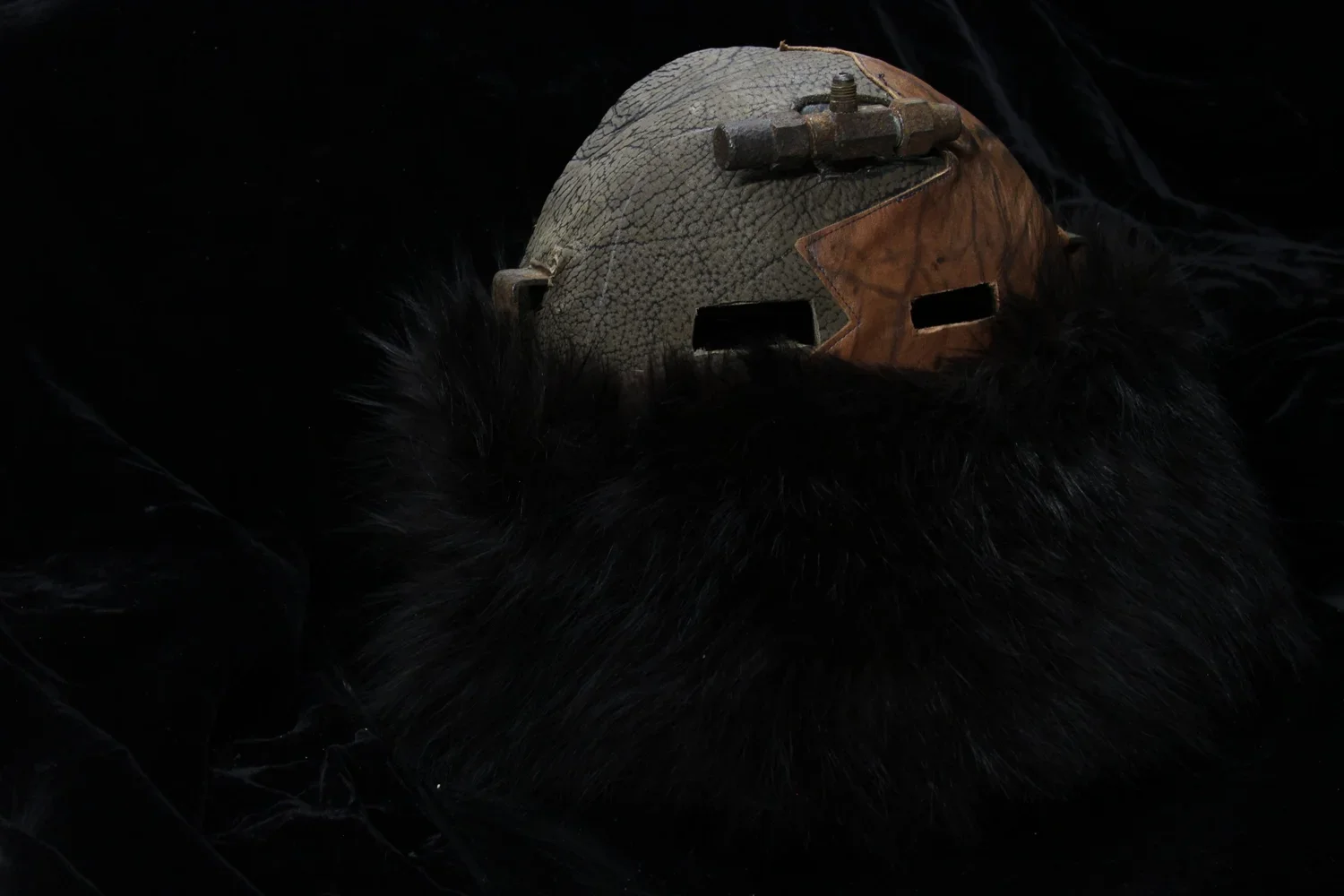
Nowhere is this transformation clearer than among the Fariseos of Sonora. Each year before Easter, these figures take on the burden of sin, moving through villages dressed in pre-Columbian attire, denying themselves comfort and pleasure. after 40 days, At the festival’s close, their masks are destroyed by fire, releasing the community from guilt for another year. That practice is disappearing. In its place, Fariseos increasingly appear dressed as armed fighters, an image pulled from gore films rather than ancestral memory. Confession has given way to spectacle; repentance to intimidation.
Long before this shift, the mask occupied a different role entirely — as a bridge between the human world and something beyond it. In isolated villages of Guerrero and Morelos, this connection survives in fragments: men still take on the form of the jaguar, a creature tied to darkness and the unknown, in ceremonies meant to protect the harvest through ritual combat. These traditions, too, are fading — losing ground to a newer logic of survival.
The narrative then shifts north, to Ciudad Juárez, a city defined by contradiction: seductive and dangerous, prosperous and impoverished at once. It is a center of maquiladora production, where laborers work under conditions bordering on servitude, isolated in cramped housing with little life beyond the factory floor. Juárez plays an unusual role for its northern neighbor — it manufactures goods for export, and in exchange, absorbs the waste sent back across the border. In the city’s scrapyards, this discarded material is broken down and sorted by the most vulnerable residents, frequently migrants awaiting their chance to cross further north.
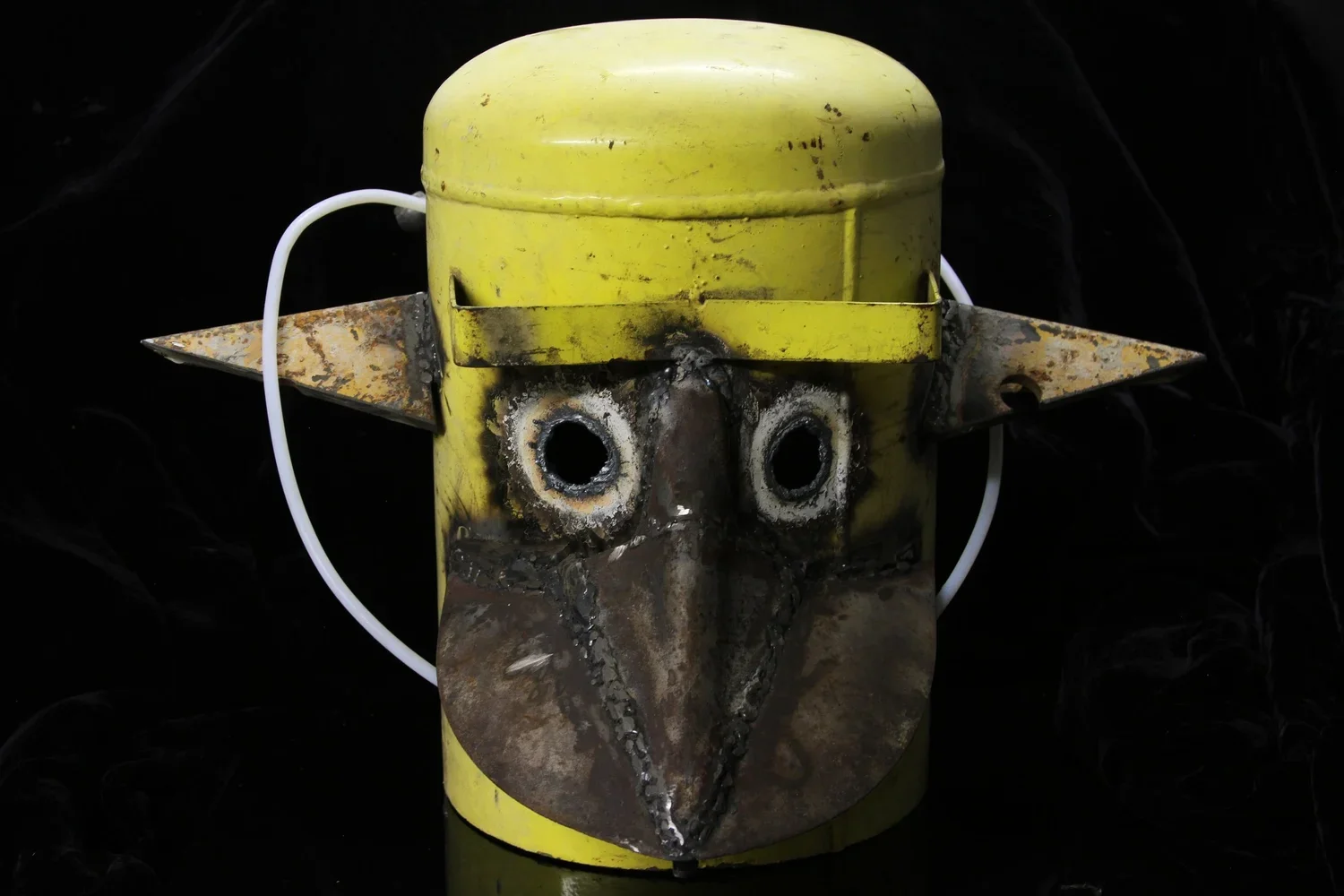
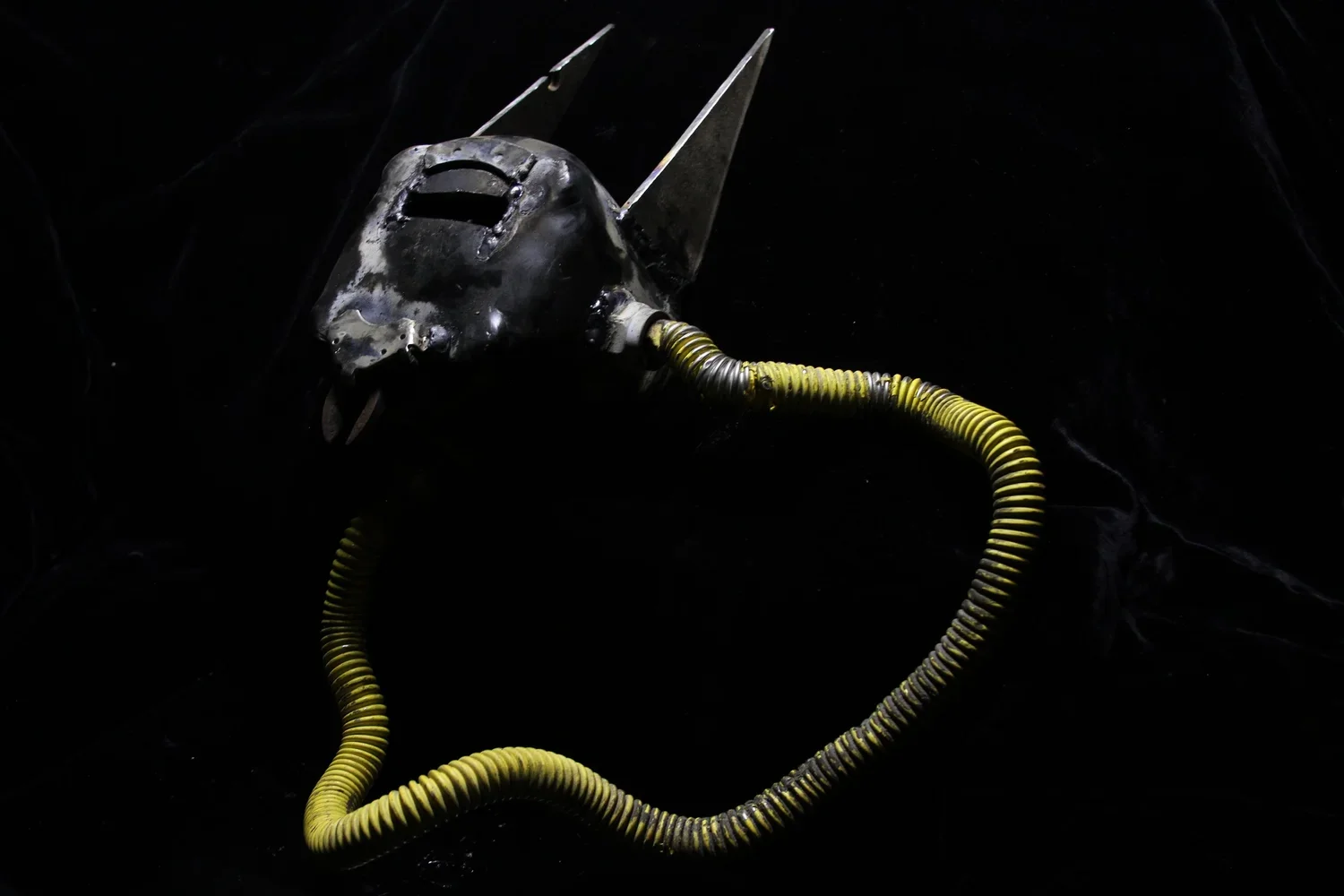
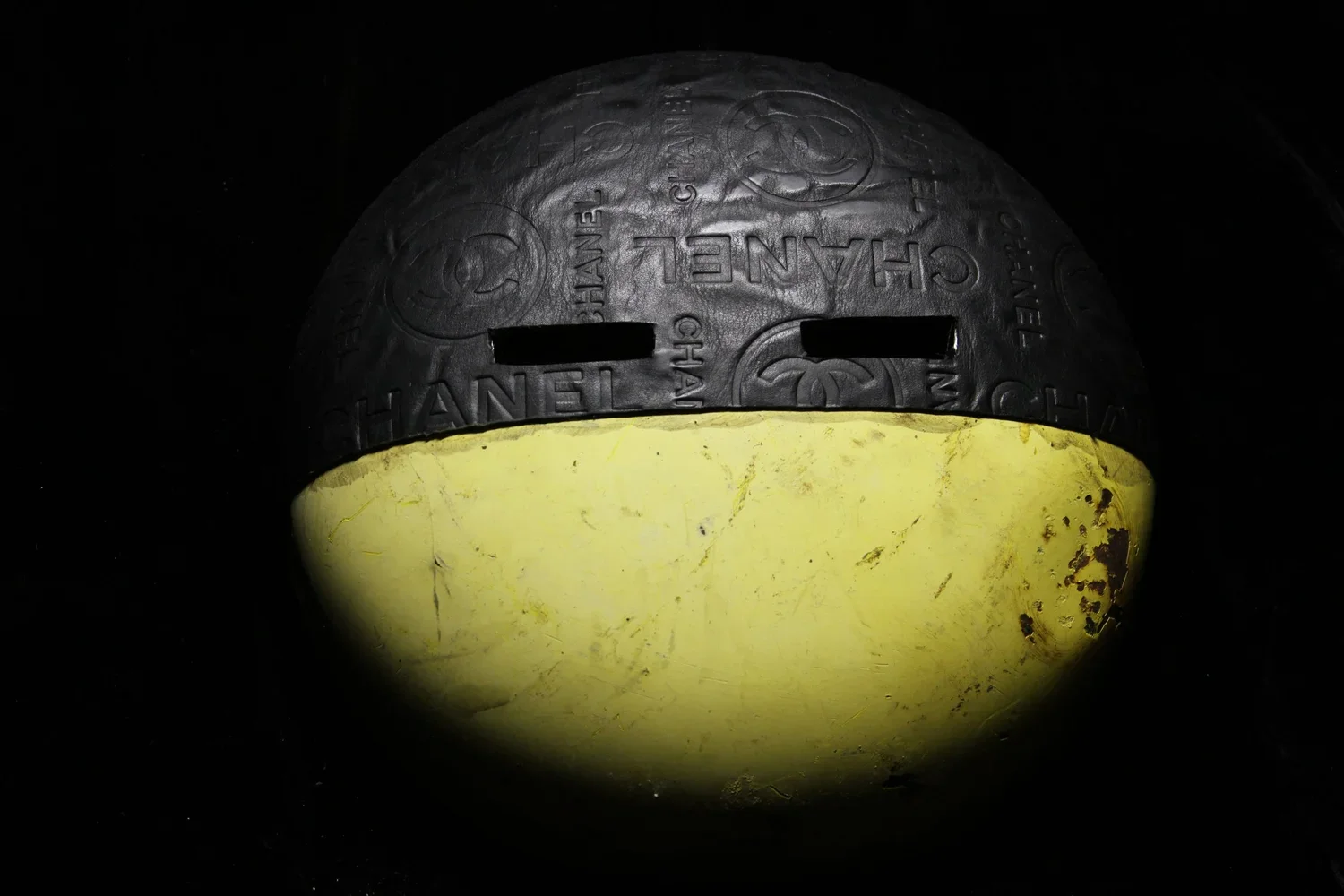
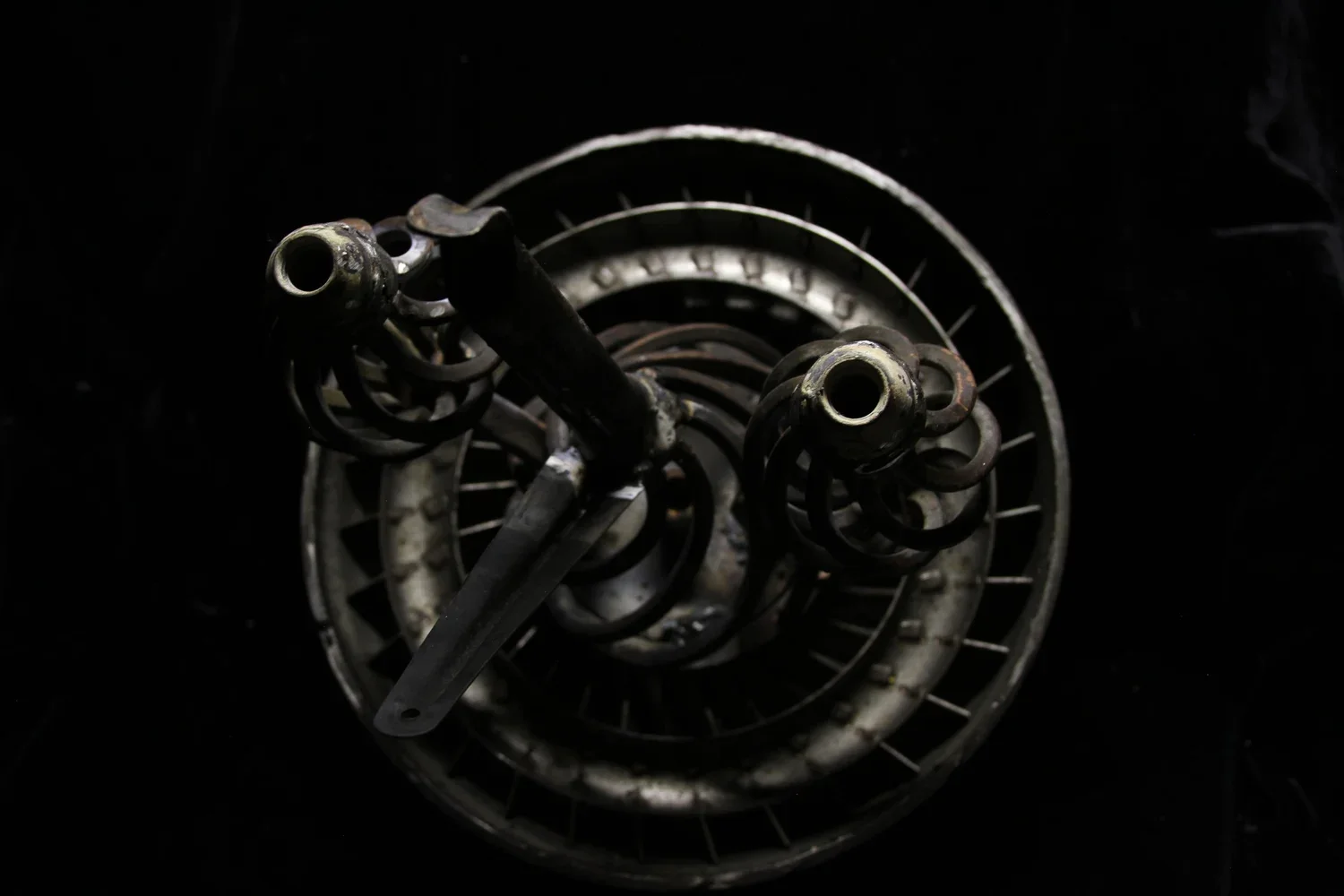
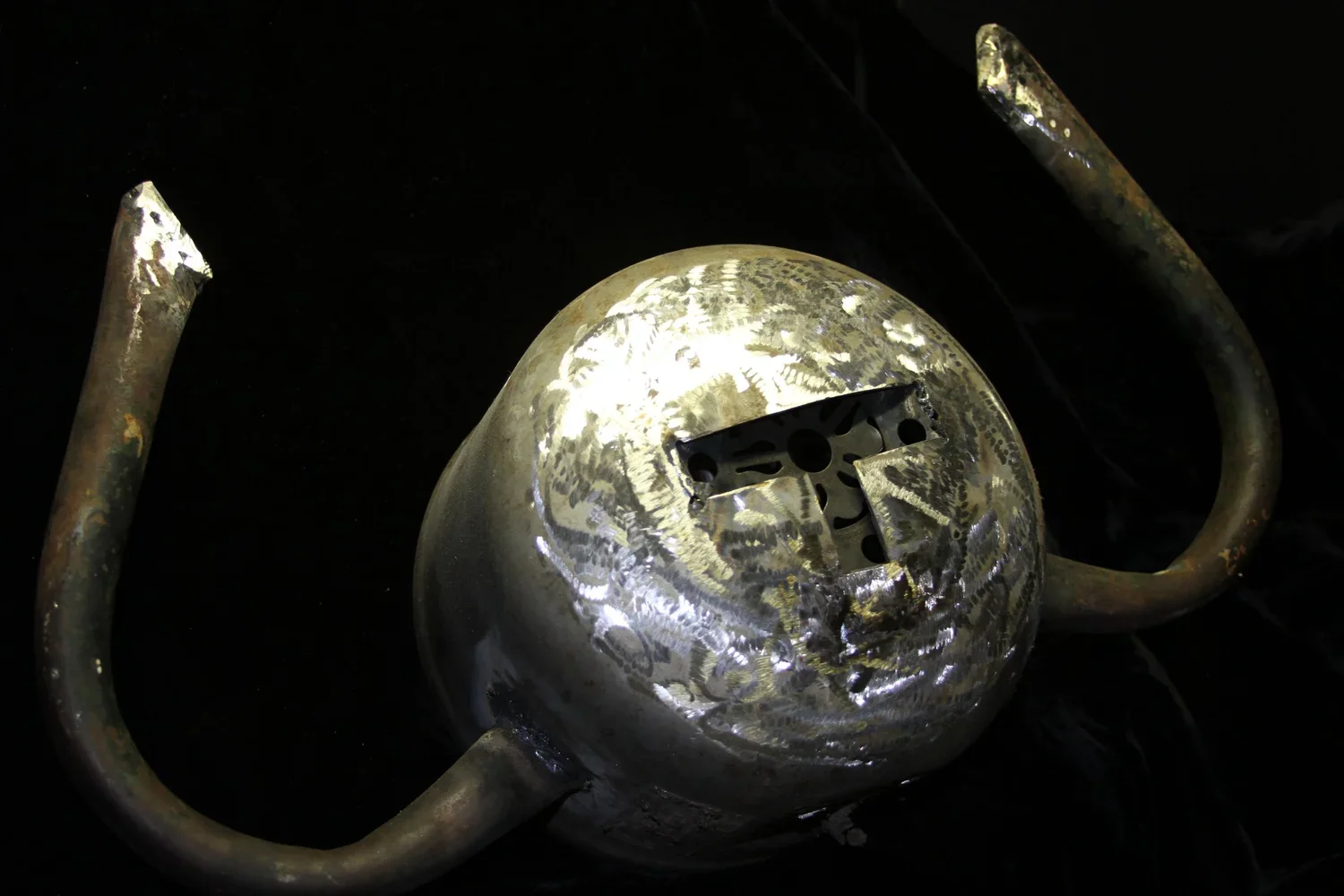
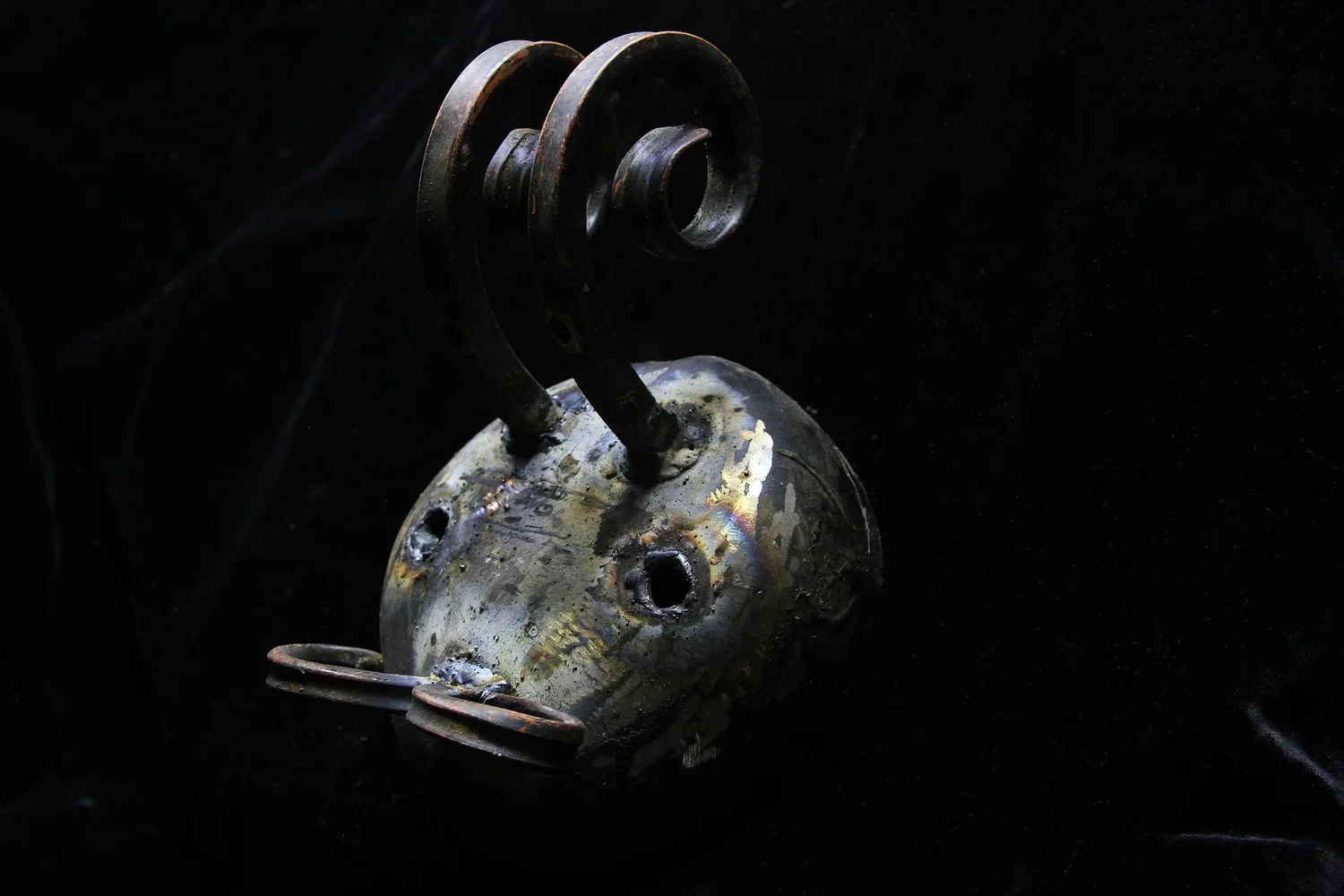
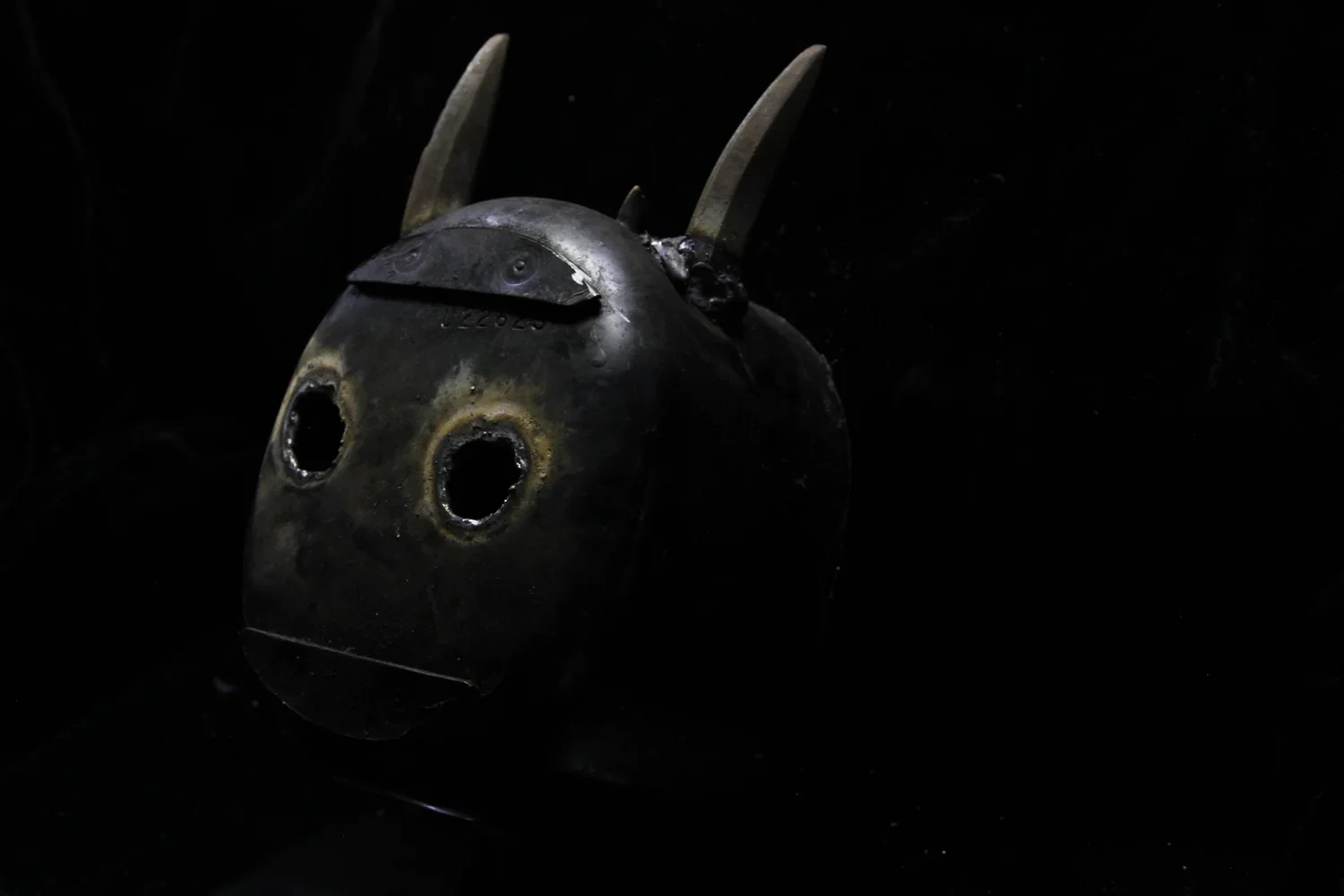
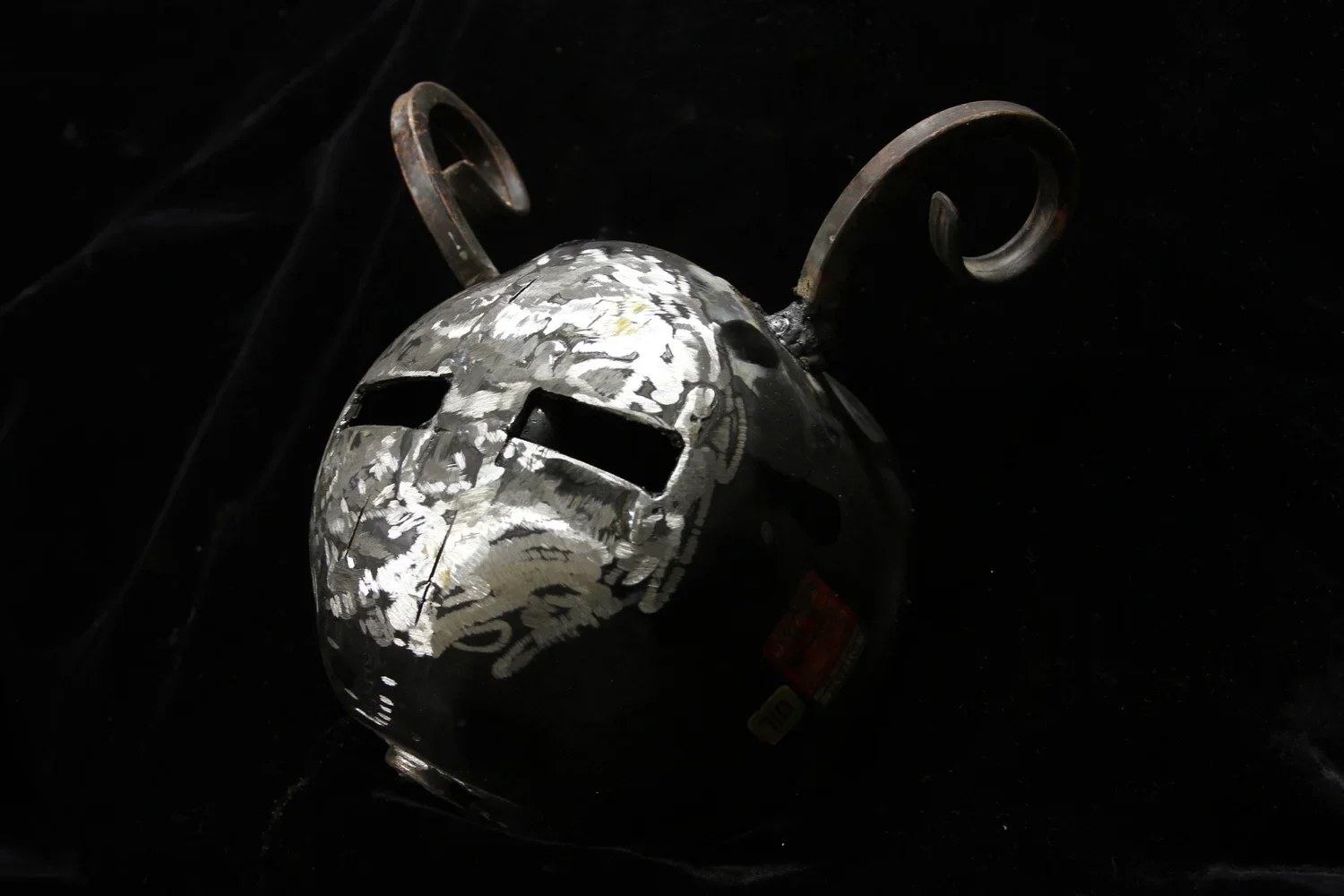
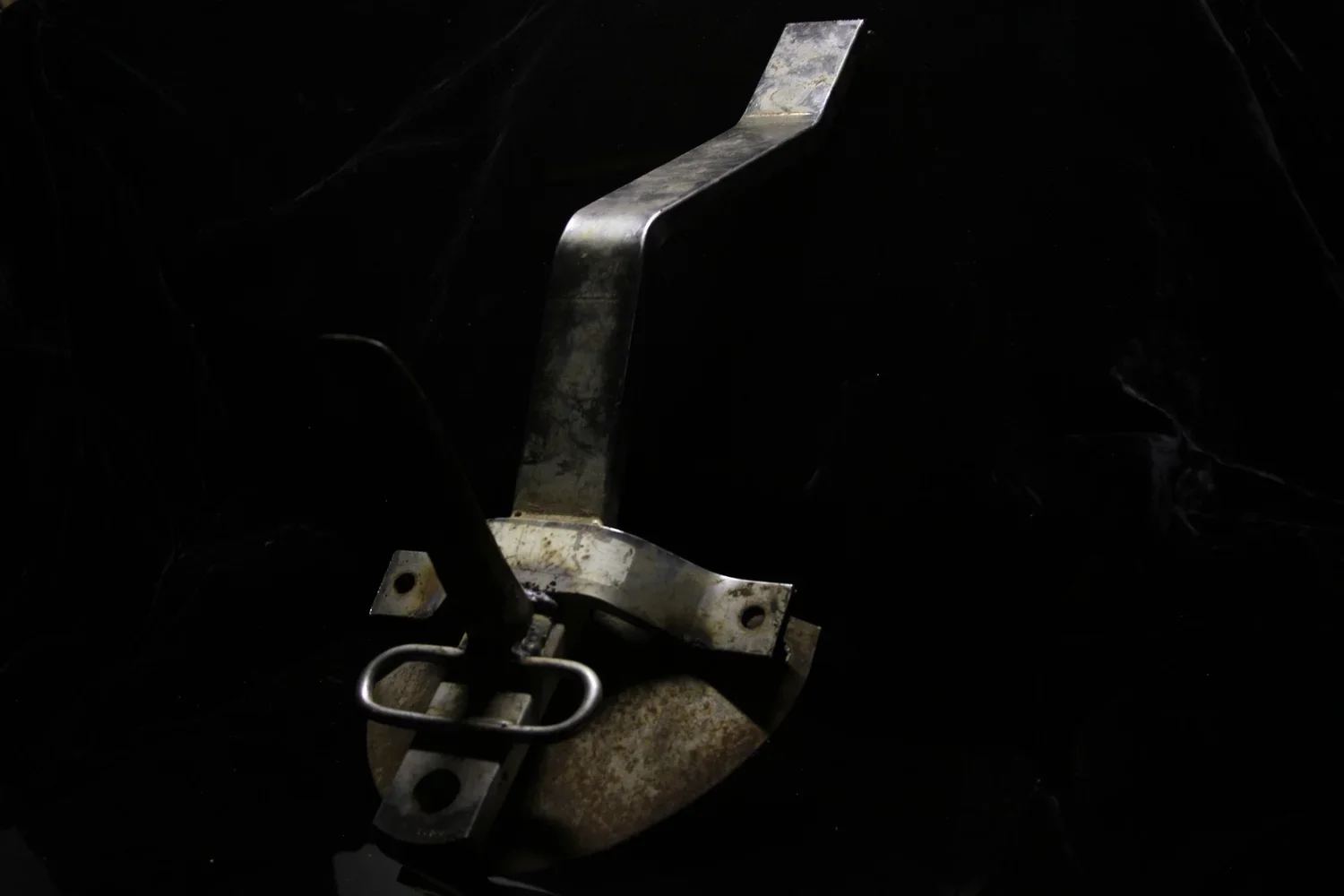
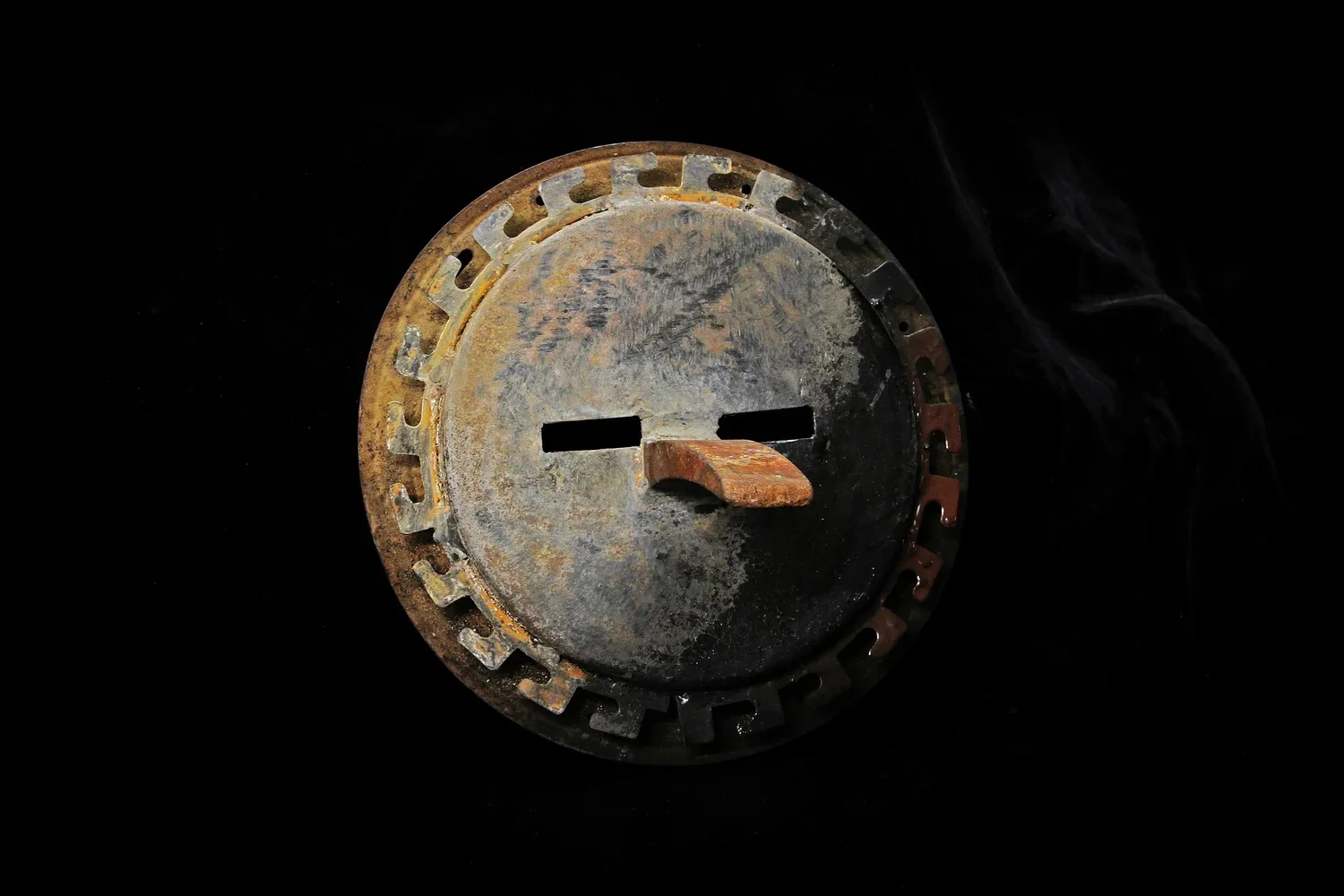
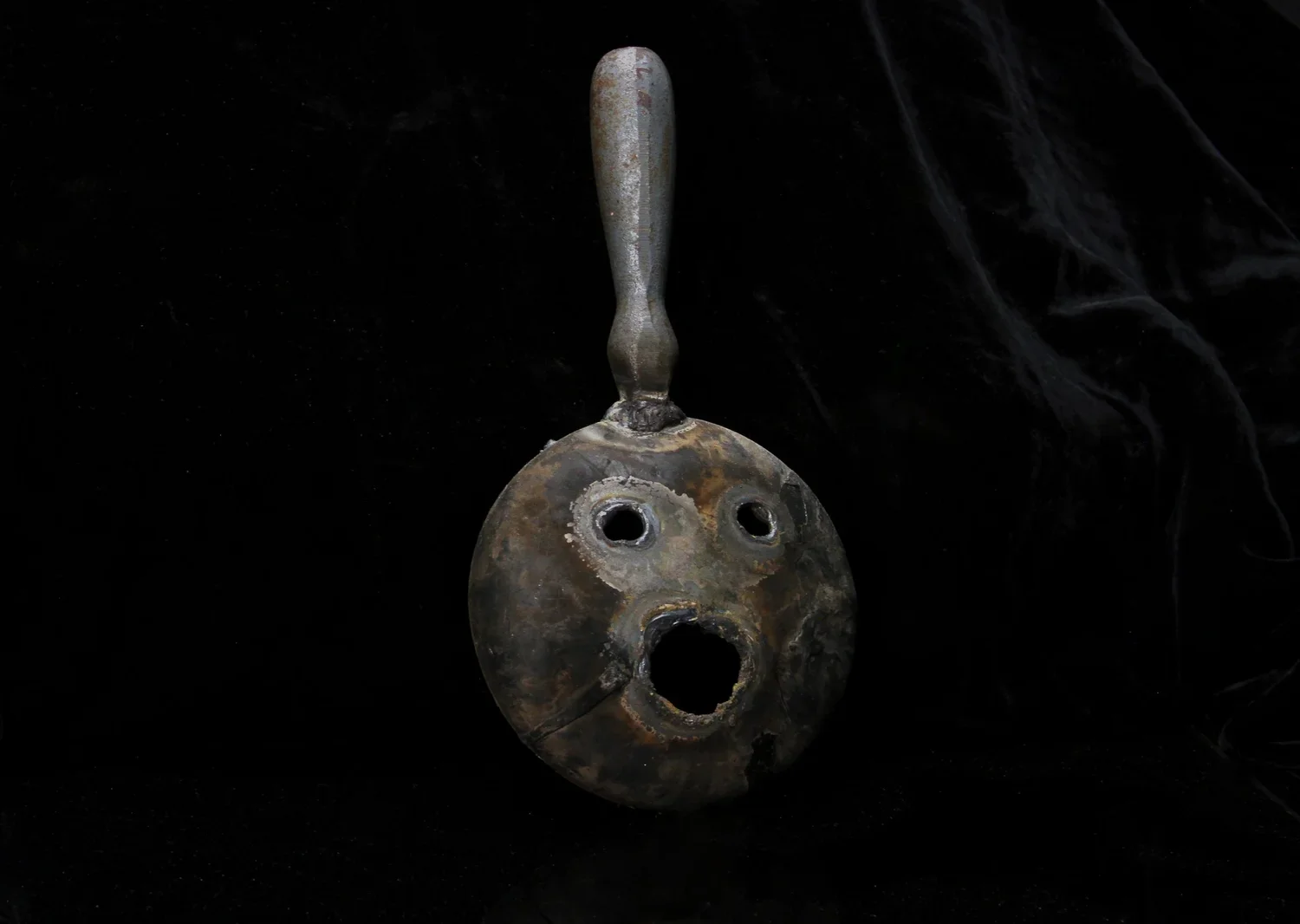
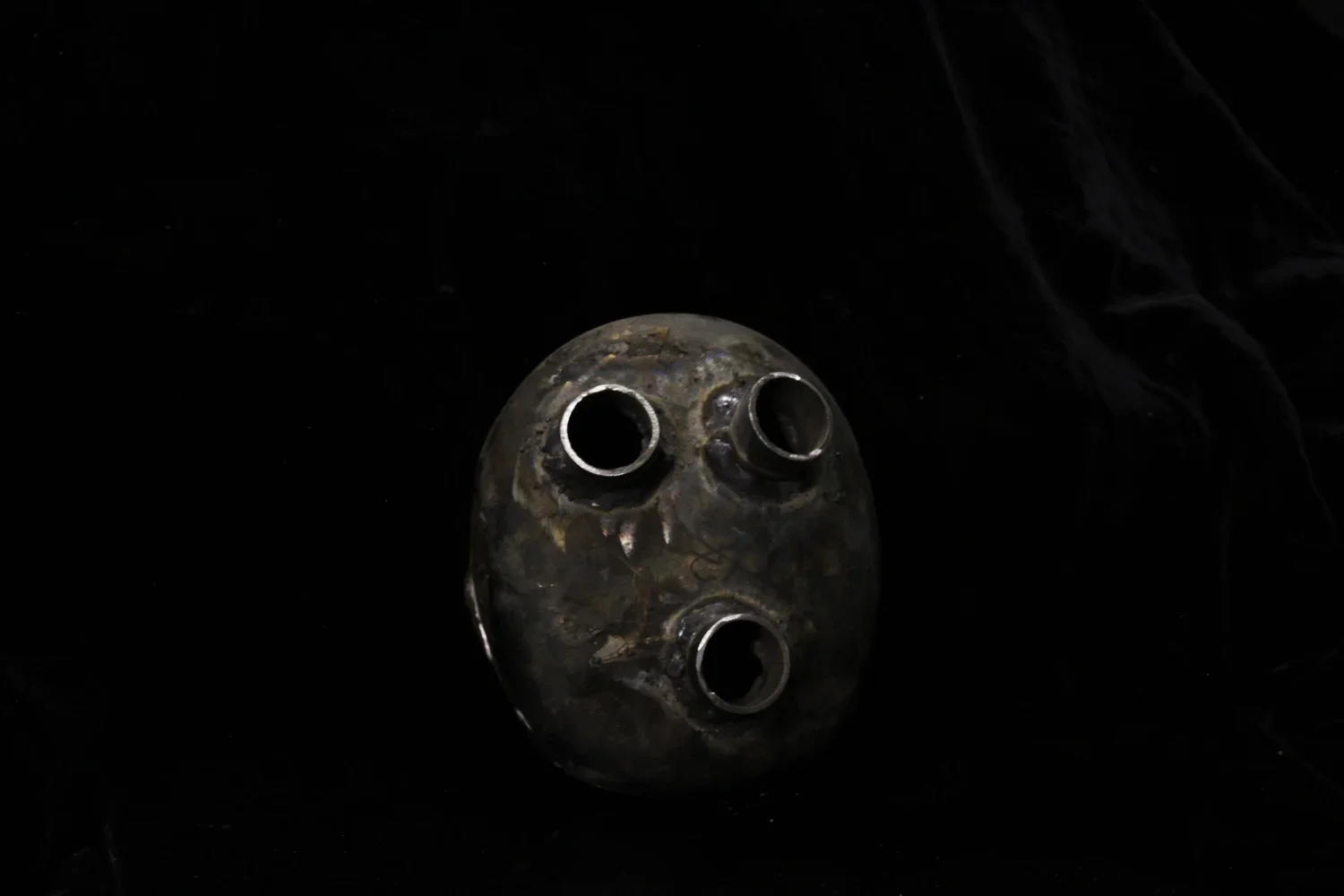
It is precisely this scrap — twisted metal, plastic fragments, industrial leftovers — that has become the raw material for a new generation of masks. These objects don't extend an unbroken ritual lineage; rather, they stand as testimony to present-day realities.
The Mask Made of Waste — Narco-Syncretism in Northern Mexico
The mask is no longer made of feathers, hides, stone, and wood. In northern Mexico, it now speaks of carnage, pop culture, the Narco. This shift is most visible in the Fariseo tradition of Sonora: for forty days, the Fariseos traditionally embody sin, roaming villages in pre-Colombian costume until their masks are finally burned at Easter — a cleansing of the community. Today, many Fariseos instead wear tactical gear, resembling B-movie mercenaries. What was once a ritual of penance has become a mimesis of urban warfare.
Originally, the mask served a precise function: a link between the finite and the infinite. In remote parts of Guerrero and Morelos, men still ritually transform into the feared jaguar to secure the coming harvest. Such rituals are fading, replaced by a new, narcotic economy of violence.
This shift leads to Ciudad Juárez, a city suspended between allure and dread. As a hub of the maquiladora industry, it houses thousands of workers, mostly women, within a near-enslaving system. Juárez functions as the filter of the US: it exports consumer goods north — and receives its waste in return. In the city's scrapyards (deshuesaderos), this waste is sorted, the toxic separated from the useful, by the poorest of the city, often migrants in transit.
It is from this very material — metal, plastic, refuse — that the new masks are made. They are not a continuation of an intact ritual heritage, but an allegorical testimony to the present: capsules of time built from trash, shaped by migrants who bring their own histories of violence and passage into the work. The mask is no longer made of stone — it is made of waste. And yet, in an era of constant peril, it preserves the ancient need to mask oneself.